Welcome to the Communications Engineering Lab (CEL)
Please contact the office only via office@cel.kit.edu until further notice.

From 24 to 28 November, Jonathan Mandelbaum visited Prof. Burg and Dr. Shen at the Telecommunications Circuits Lab at EPFL in Lausanne. This visit provided an excellent opportunity to exchange ideas on new decoding algorithms and their feasibility in hardware implementation. Discussions with hardware-focused researchers always yield valuable insights and new ideas that will inform future algorithm development. The visit laid the foundation for promising collaborative projects.
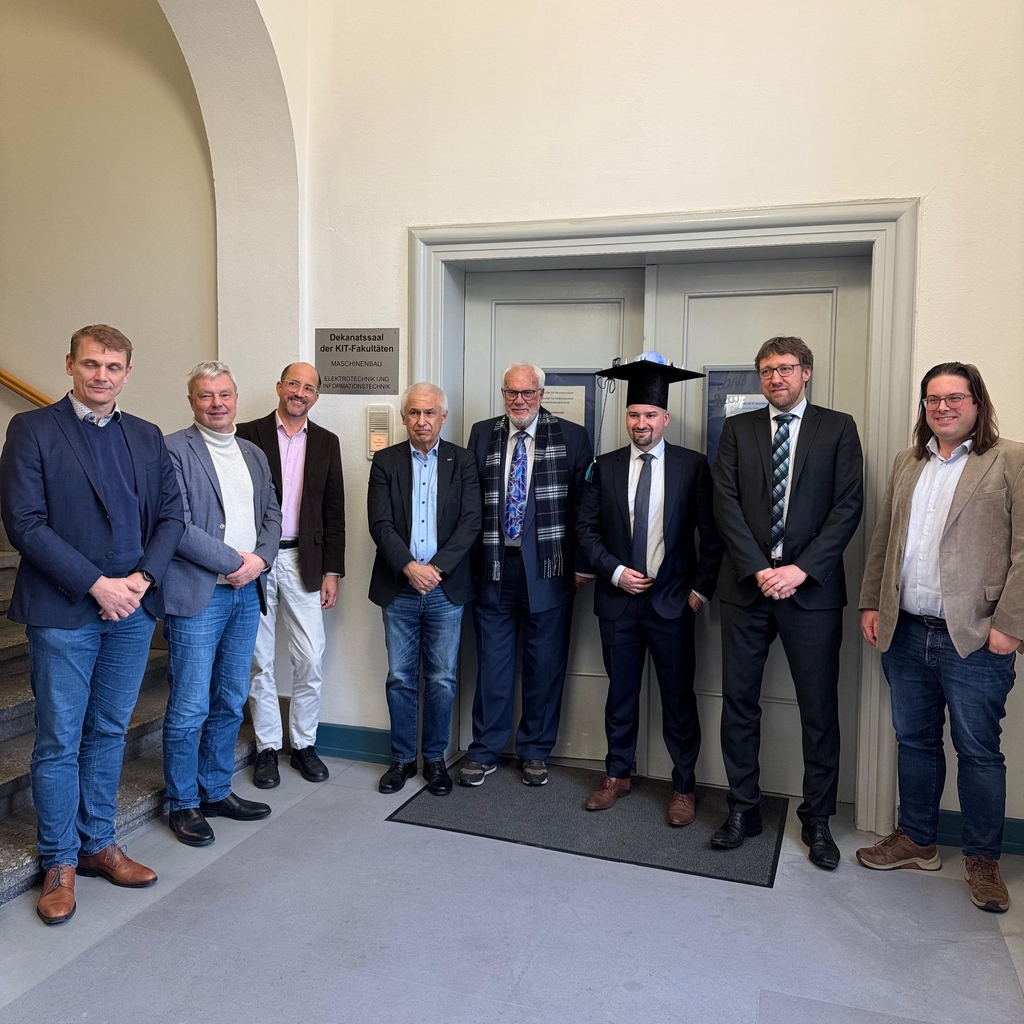
We are very pleased to announce that on November 28, 2025, Eike-Manuel Edelmann from Laurent Schmalen’s group successfully defended his dissertation entitled “Spiking Neural Networks for Communication Systems: Encoding Schemes, Learning Algorithms, and Equalization Techniques.” The thesis developed and investigated initial algorithms for a new generation of neural networks which, due to their brain-like architecture, enable energy-efficient and high-performance signal processing. Congratulations, dear Eike, and all the best for your future!
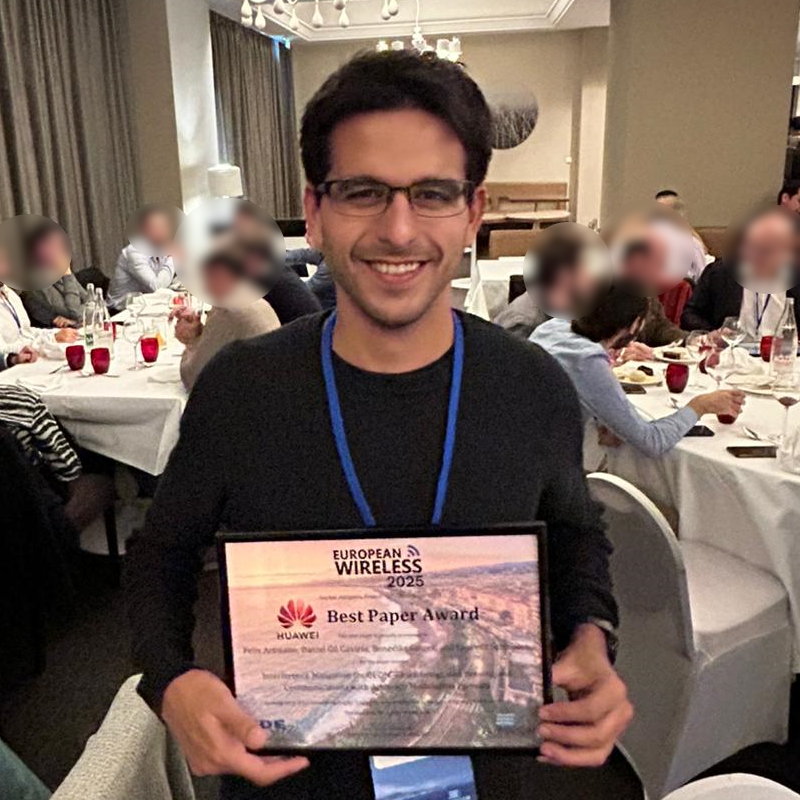
We are delighted to announce that Daniel Gil Gaviria has received the Best Paper Award at European Wireless 2025, held in Sophia-Antipolis, France. The awarded paper, titled “Interference Mitigation for OFDM-Based Integrated Sensing and Communications with Arbitrary Modulation Formats”, was co-authored by Benedikt Geiger, Felix Artmann, and Laurent Schmalen. This work addresses advanced interference mitigation techniques for integrated sensing and communication systems in future wireless networks. Congratulations to Daniel and his co-authors on this outstanding achievement!
Paper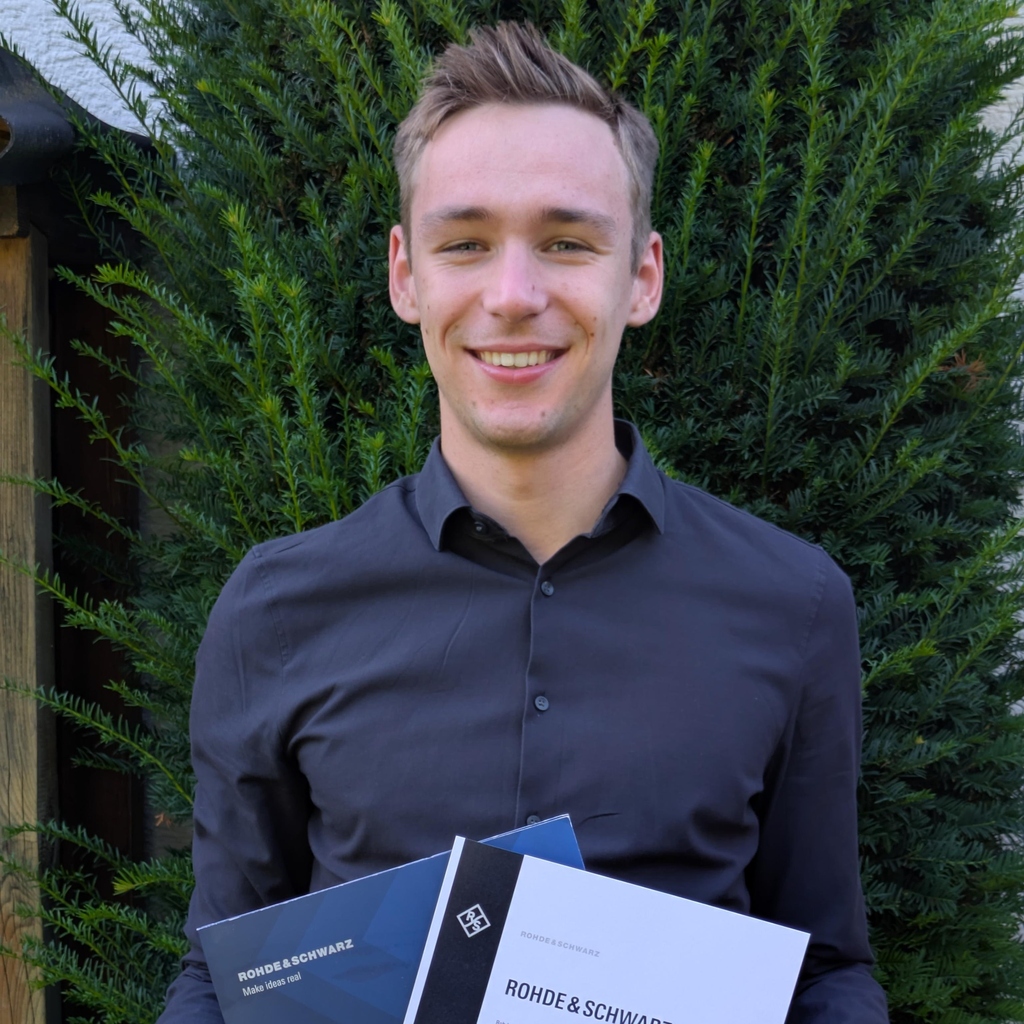
CEL student Henning Lulei received the Rohde & Schwarz Award for the best Bachelor’s thesis 2025 for his work “Ensemble Decoding of Polar Codes”. The award was presented at the Faculty Day. His thesis makes an important contribution to the efficient decoding of short block-length codes, which are gaining increasing relevance for future communication systems. Results from this work were also presented at this year’s International Symposium on Topics in Coding at UCLA, Los Angeles.
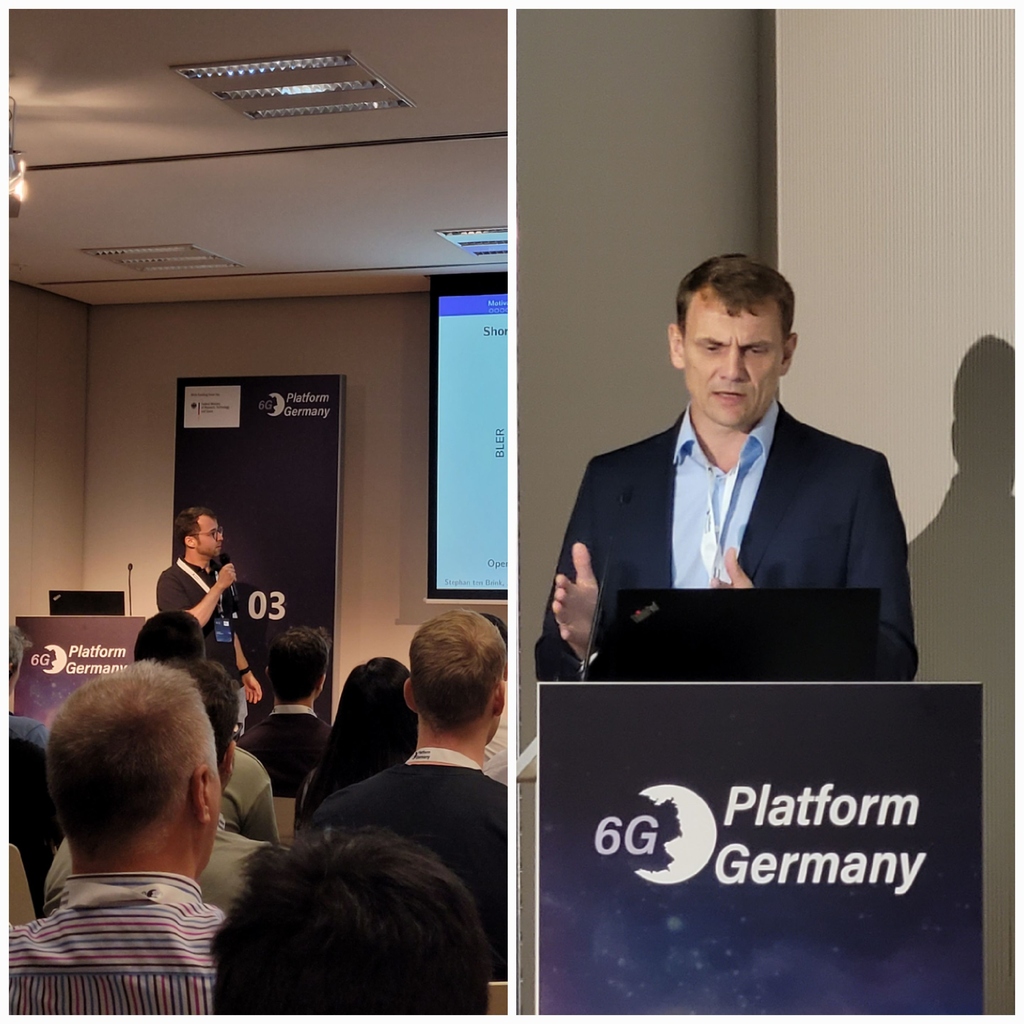
In early July 2025, the CEL attended the Berlin 6G Conference and presented current research progress on the topic of 6G. The focus was on two presentations on “Enabling Adaptive Protocol Behaviour using Machine Learning” and “Design Aspects of a 6G Coding Scheme” as well as a poster on Integrated Sensing and Communications. The conference provided an excellent platform for discussing the challenges and potential of 6G.

On Wednesday, June 25th, 2025, the CEL had hosted the ITG Specialist Group: »Applied Information Theory«. On a full day, we had intensive discussions and presentations on the topic of applied information theory for optical communications with guests from other universities and industry in Germany.
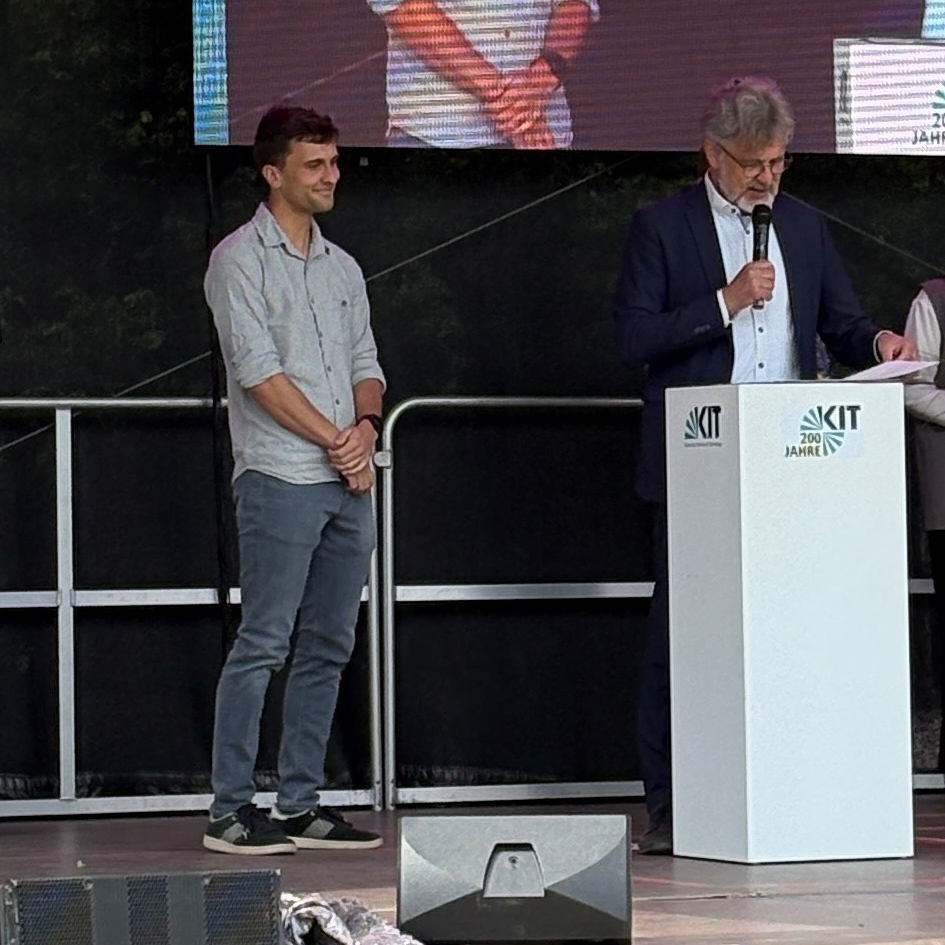
Our colleague Luca Schmid received the City of Karlsruhe Award for his master’s thesis "Neural Enhancement of Factor Graph-Based Symbol Detection." The award was presented to him by Mayor Dr. Frank Mentrup during the 2025 KIT Campus Day. Mr. Schmid’s thesis makes an important contribution to the design of energy-efficient communication systems.
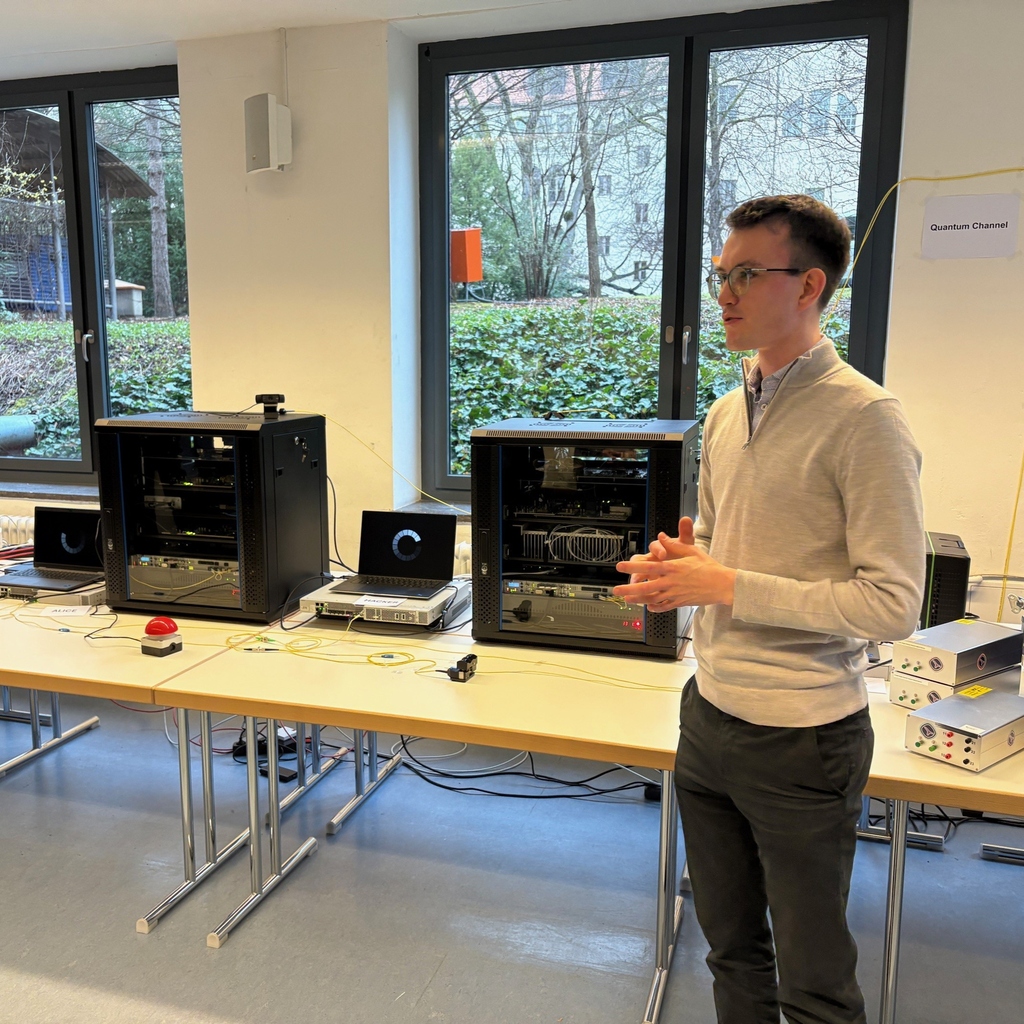
Quantum computers are a nightmare for data security, as they could potentially break many of the encryption methods used today. This affects encrypted emails, messaging services, and online banking, among other things. Researchers at the Karlsruhe Institute of Technology (KIT), together with partners, have developed a method that can reliably protect internet connections today against the quantum technology of tomorrow.
Press release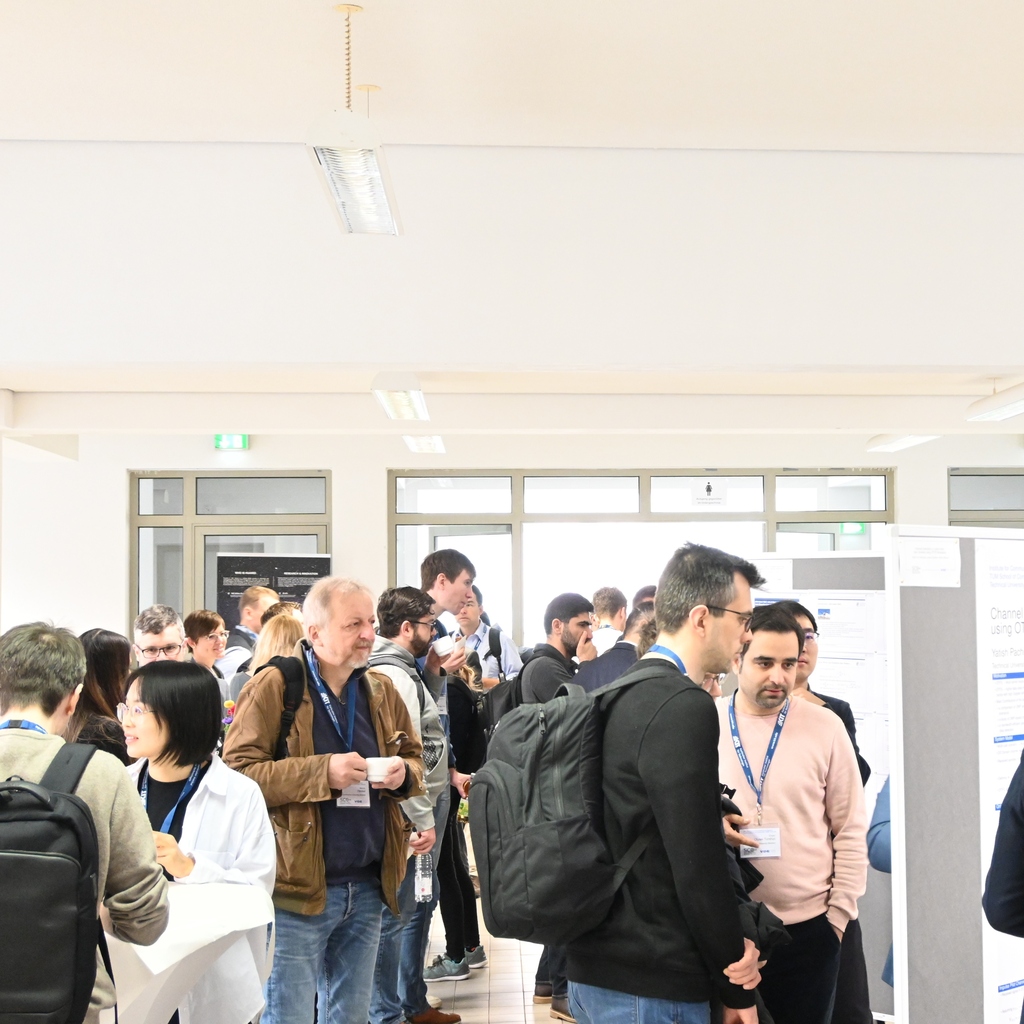
The Communications Engineering Lab (CEL) organized the 14th ITG Conference on Systems, Communications and Coding (SCC) in Karlsruhe from March 10 to 13, 2025. With high-profile keynotes, engaging presentations, and poster sessions, SCC provided an excellent platform for exchange between academia and industry on the latest technological innovations in communication technology. A diverse social program completed the successful conference.
Conference Website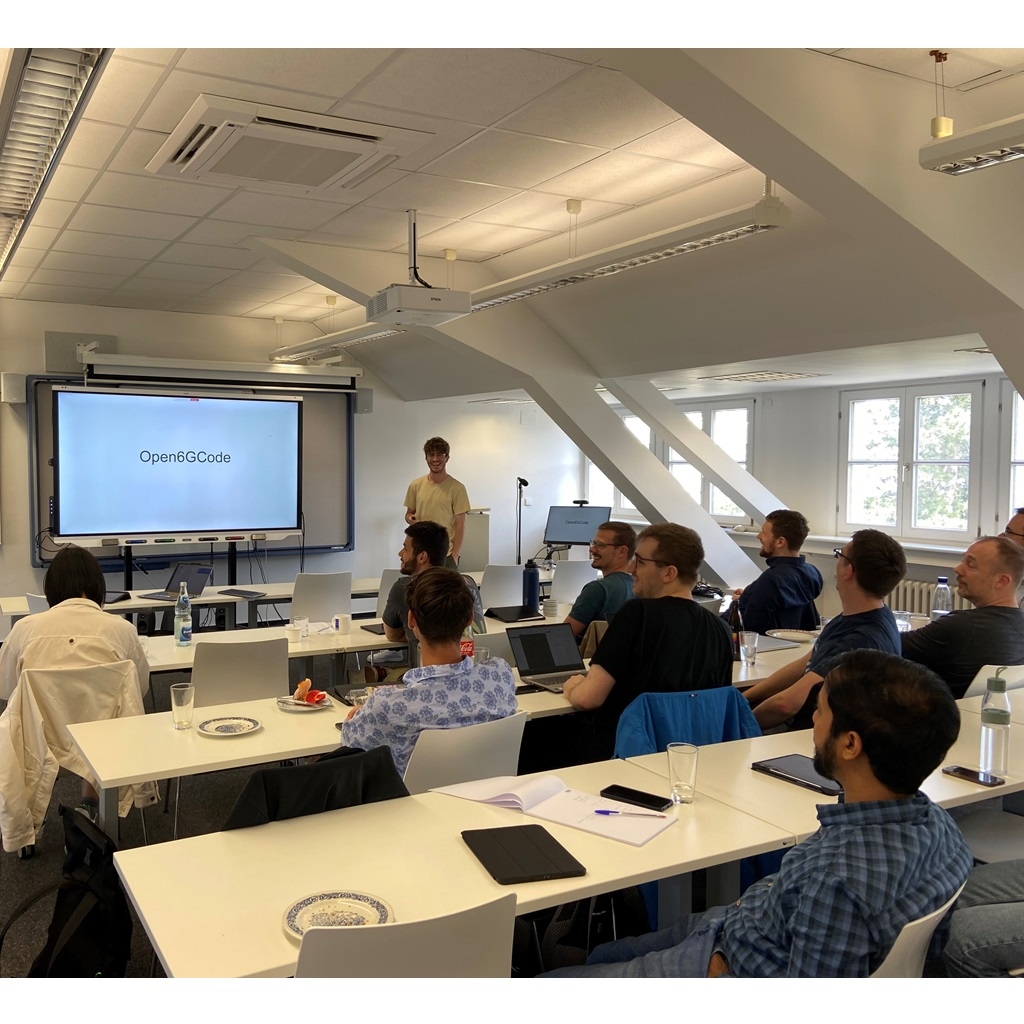
On July 21, 2024, the 4th Open6G Southwest Coding Workshop took place at the CEL in collaboration with the EMS of RPTU and INÜ of the University of Stuttgart. The workshop provided a platform for experts from the region to exchange information on the latest developments in channel coding, particularly for the upcoming 6G mobile communication standard. A significant part of the workshop was the exchange on the Open6G Codeproposal for 6G. Innovative approaches and potential challenges were discussed intensively.
Full Workshop Report
Prof. Laurent Schmalen has been elevated to the grade of an IEEE Fellow. He is being recognized for his contributions to the design of error correction and modulation techniques for optical networks. The IEEE grade of Fellow is conferred by the IEEE Board of Directors upon a person with an outstanding record of accomplishments in any of the IEEE fields of interest. The total number selected in any one year cannot exceed one-tenth of one- percent of the total voting membership. IEEE Fellow is the highest grade of membership and is recognized by the technical community as a prestigious honor and an important career achievement.
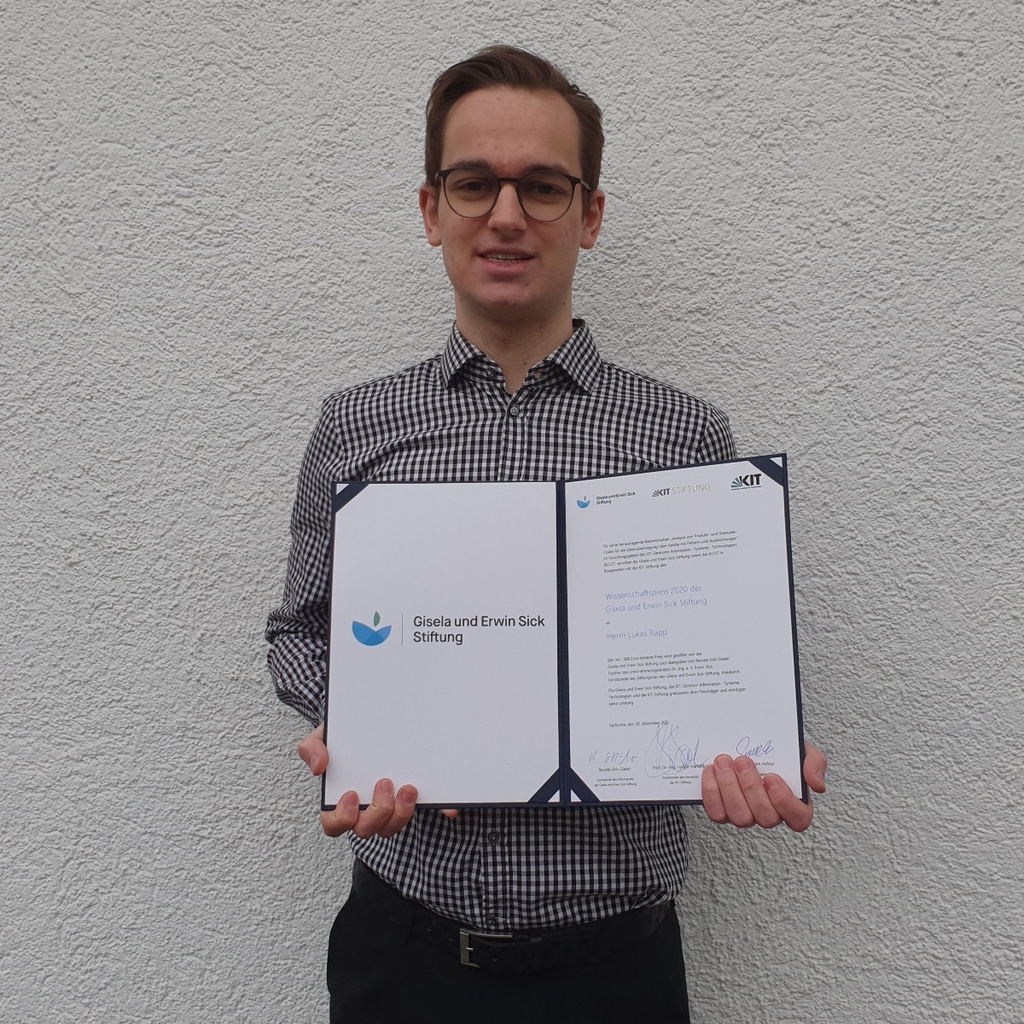
The Science Award of the Gisela and Erwin Sick Foundation, honours both fundamental and application-oriented research in the KCIST research area. The Best Thesis Award 2020 was given to Mr. Lukas Rapp his bachelor thesis conducated at CEL. The title of his thesis was "Analysis of product and staircase codes for data transmission over channels with errors and erasures". Our congratulations go to the award recipient!
[Link to publication related to the thesis]
Link to the KCIST web page
A team led by Prof. Laurent Schmalen from the CEL has been awarded this years "Best Paper Award" of the IEEE/OSA Journal of Lightwave Technology. The award recognizes the paper that has been most cited in the past three years. The awarded publication considers the design of novel optical communication systems using machine learning techniques.
Publication on IEEE